
Many people enjoy the convenience of using whitening strips at home to brighten their smiles. These products are easy to use and widely available, which makes them a popular option for improving tooth color. However, once the strips come off, many people hesitate about what to do next.
One of the most common questions people ask is whether brushing immediately after using whitening strips is safe. Some believe brushing right away helps remove leftover gel. Others worry that brushing too soon could damage enamel or reduce the effectiveness of the treatment. There is also confusion about whether skipping brushing might leave chemical residue on the teeth.
Understanding the right aftercare routine can make a big difference in protecting your enamel and improving results. Many people exploring teeth whitening options want to know the safest way to care for their smile afterward. In this blog, we will explain how whitening strips work, when brushing is recommended, and how to maintain a bright smile safely.
How Whitening Strips Work on Your Teeth
Whitening strips use active ingredients designed to remove stains from the surface of teeth and lighten deeper discoloration within the enamel. Understanding how these products work can help you better understand why aftercare matters.
Active Whitening Ingredients
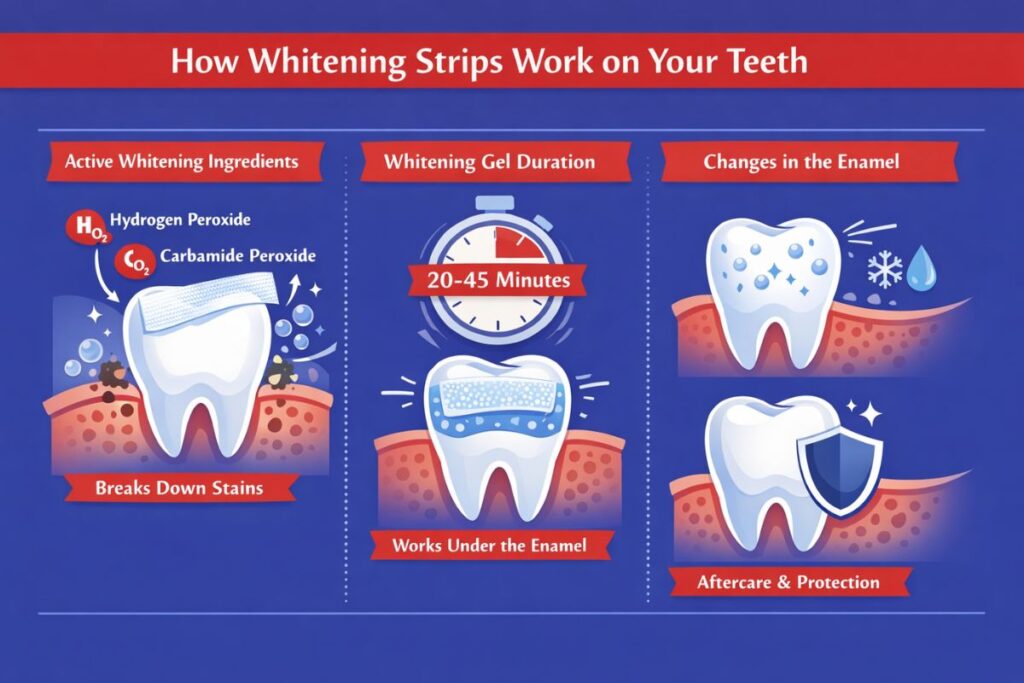
Most whitening strips contain either hydrogen peroxide or carbamide peroxide. These ingredients work by penetrating the enamel and breaking down stain molecules that cause discoloration.
Over time, foods, beverages, and lifestyle habits can cause stains to build up on teeth. Coffee, tea, red wine, and certain sauces are common examples. Whitening agents release oxygen molecules that break apart these stain compounds, allowing the tooth surface to appear brighter.
How Long Does Whitening Gel Stay Active
Whitening strips typically stay on teeth for about 20 to 45 minutes, depending on the product instructions. During this time, the gel slowly penetrates the enamel and begins breaking down stain particles.
Even after the strips are removed, the whitening agents may remain active for a short period. This means the teeth are temporarily more sensitive and slightly dehydrated. Because of this, the enamel surface needs gentle care immediately after treatment.
What Happens to Teeth During Whitening
During the whitening process, enamel undergoes a temporary change. The peroxide ingredients open tiny pores in the enamel so stain molecules can be lifted away.
This process can cause mild dehydration of the enamel, which sometimes leads to temporary sensitivity. Some people notice that their teeth feel slightly sensitive to cold drinks or air for a short period after treatment.
Fortunately, this effect usually fades within a few hours. Proper aftercare helps the enamel return to its normal state and protects the teeth from irritation.
Should You Brush Your Teeth After Whitening Strips?
The short answer is that brushing immediately after removing whitening strips is usually not recommended. Dental professionals typically suggest waiting a short time before brushing.
When whitening gel interacts with enamel, it temporarily opens microscopic pores on the tooth surface. This makes the teeth slightly more sensitive than usual. Brushing too soon, especially with firm pressure, may irritate the enamel or gums.
Instead of brushing right away, many professionals recommend gently rinsing your mouth with lukewarm water. This helps remove any leftover gel while allowing your teeth time to recover from the treatment.
After waiting about 30 minutes, brushing can safely be done using a soft-bristled toothbrush and a gentle toothpaste. This helps remove remaining residue without irritating the enamel.
Quick recommendation summary
- Remove whitening strips carefully
- Rinse your mouth with water
- Wait about 30 minutes before brushing
- Use a soft toothbrush and gentle pressure
This simple routine allows your teeth to recover while keeping your mouth clean and comfortable.
Why Brushing Immediately After Whitening May Not Be Ideal
Brushing right away might seem like a good idea, but it can sometimes cause unnecessary irritation. Understanding why helps explain why waiting briefly is recommended.
Temporary Tooth Sensitivity
Whitening ingredients briefly open pores in the enamel during treatment. This process helps break apart stains but can also make teeth temporarily sensitive.
If brushing occurs immediately after treatment, the toothbrush may irritate these sensitive surfaces. Waiting a short time allows the enamel to stabilize again.
Enamel Is Slightly More Vulnerable
Because enamel pores are open after whitening treatment, the surface is temporarily more delicate than usual. Brushing too aggressively at this stage can cause discomfort.
Using gentle pressure and waiting before brushing allows the enamel to rehydrate and regain its natural strength.
Gum Irritation Risk
Sometimes whitening gel touches the gum tissue during treatment. This can lead to mild gum irritation for some people.
Brushing immediately afterward may increase that irritation. Giving your mouth a short break before brushing helps reduce discomfort and allows gum tissue to settle.
The Best Routine After Using Whitening Strips
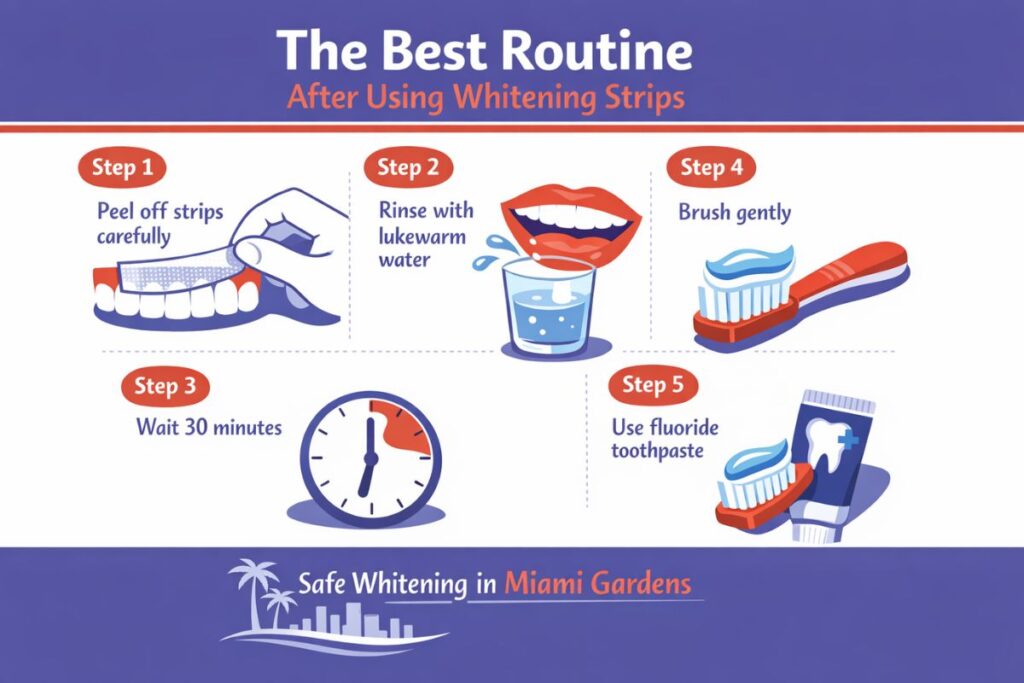
Following a simple routine after using whitening strips helps protect your enamel while keeping your mouth clean.
Step 1: Carefully peel off the whitening strips once the recommended time has passed.
Step 2: Rinse your mouth with lukewarm water to remove leftover gel from the teeth and gums.
Step 3: Wait about 30 minutes before brushing your teeth. This allows enamel pores to close and sensitivity to settle.
Step 4: Brush gently using a soft-bristle toothbrush. Avoid aggressive scrubbing.
Step 5: Choose a fluoride or sensitivity toothpaste to strengthen enamel and reduce discomfort.
This routine supports safe teeth whitening in Miami Gardens while protecting the health of your smile.
Common Mistakes People Make After Whitening Strips
Many people unintentionally reduce their whitening results or irritate their teeth because of small mistakes after treatment.
One common mistake is brushing too aggressively. Scrubbing with heavy pressure can irritate sensitive enamel and gums.
Another mistake is eating foods that cause stains immediately after treatment. Teeth may be slightly more porous for a short time, making them more vulnerable to staining.
Drinking coffee, tea, or red wine right away can quickly undo whitening progress. Waiting a few hours before consuming dark beverages can help protect results.
Some people also overuse whitening strips, thinking that using them more frequently will speed up results. Overuse can lead to sensitivity and irritation.
Finally, skipping oral hygiene altogether can also be a mistake. Even though brushing should be delayed briefly, maintaining regular oral care remains essential.
Tips to Maintain Your Whitening Results
Keeping your smile bright requires good daily habits and a little attention to what you eat and drink.
Avoid dark beverages like coffee, cola, and red wine for several hours after whitening. These liquids can stain teeth more easily during the recovery period.
Using a straw for cold beverages can reduce contact with the front teeth and help maintain brightness.
Regular brushing and cleaning between teeth help prevent plaque buildup that can dull your smile over time.
Professional cleanings also play a major role in maintaining results. Routine visits allow dental professionals to remove surface stains that develop gradually.
Following product instructions carefully is also important. Whitening products work best when used as directed rather than more frequently than recommended.
When You Should Talk to a Dentist About Whitening
While most whitening treatments are safe, certain situations may require professional guidance.
If you experience strong sensitivity that lasts more than a few days, it may be helpful to speak with a dental professional.
Gum irritation that continues for more than two days should also be evaluated. Sometimes adjusting the whitening method or product can help.
Uneven whitening results are another reason to seek advice. Stains may sometimes require professional treatment rather than over-the-counter strips.
Some types of discoloration also do not respond well to whitening strips. In those situations, a dental professional can recommend other treatments that may be more effective.
Taking care of your teeth after using whitening strips is just as important as the treatment itself. While brushing is an essential part of oral hygiene, doing it immediately after whitening may cause unnecessary sensitivity.
Waiting about 30 minutes before brushing allows your enamel to recover and reduces the risk of irritation. Rinsing with water first and brushing gently afterward helps keep your smile clean while protecting your teeth.
If you are considering professional teeth whitening or have questions about the safest options for your smile, guidance from a dental professional can make a difference. The team at American Dental Center is dedicated to helping patients maintain healthy, confident smiles.
If you would like personalized advice or want to explore brighter smile options, schedule a consultation today and take the next step toward a healthier smile.
People Also Ask
1. Why do teeth feel sensitive after using whitening strips?
Whitening ingredients temporarily open tiny pores in the enamel. This process can cause short-term sensitivity until the enamel rehydrates.
2. How long should I wait to eat after using whitening strips?
It is usually recommended to wait at least 30 minutes before eating. This allows the teeth to recover and reduces the chance of new stains forming.
3. Can whitening strips damage tooth enamel?
When used as directed, whitening strips are generally safe for enamel. Overusing them or applying them too often may increase sensitivity.
4. Is it normal for gums to feel irritated after whitening strips?
Mild gum irritation can occur if the whitening gel touches the gum tissue. This irritation usually fades within a short time.
5. How often can I safely use whitening strips?
Most products are designed to be used once daily for a specific treatment period. Always follow the product instructions to avoid sensitivity.